
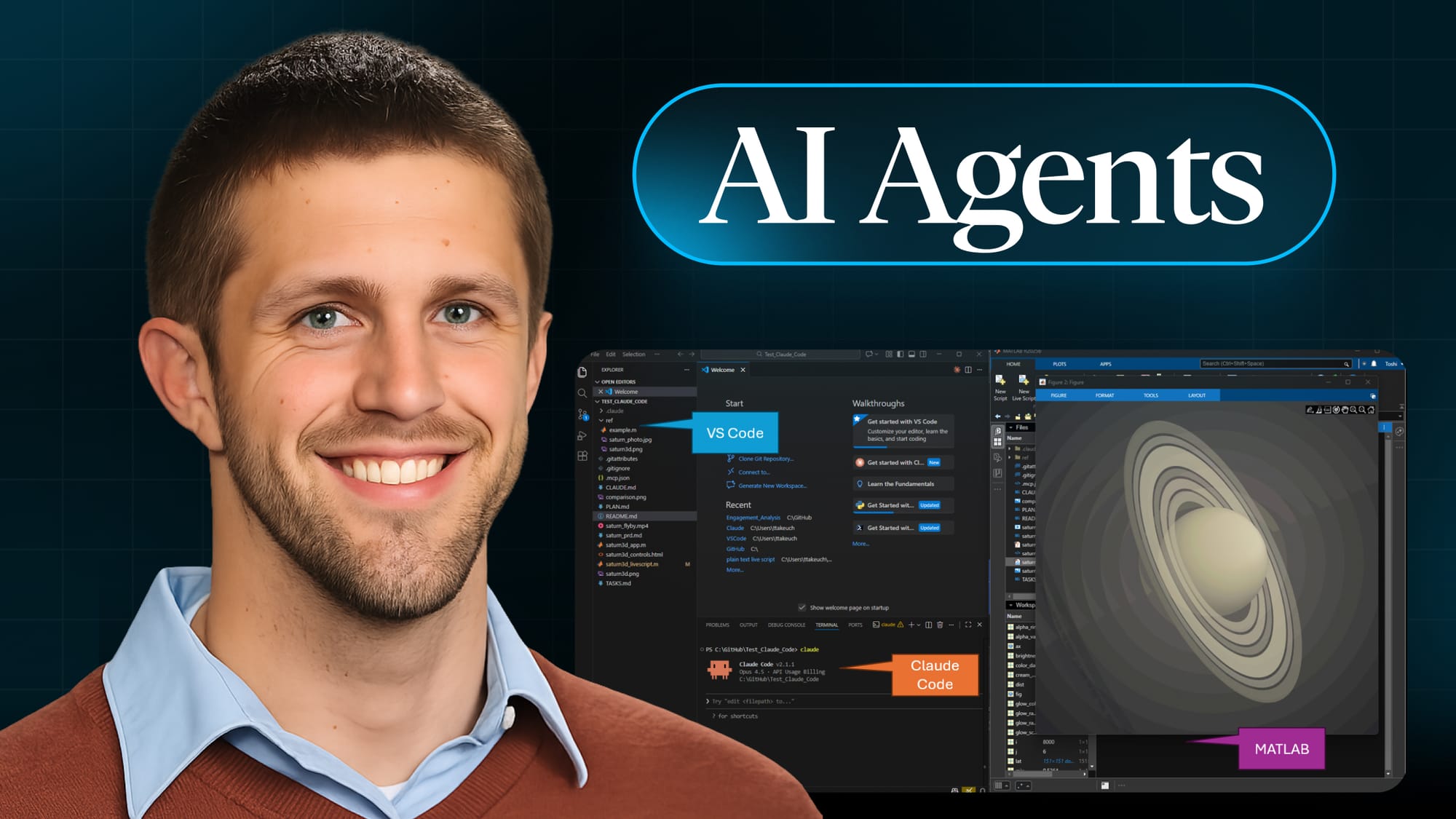
A few years ago, artificial intelligence was a specialized tool used only in niche applications. Engineers who applied machine learning or advanced modeling techniques were specialists, working with data, training models, and integrating solutions into larger systems. Although powerful, that style of AI was narrow and context-specific. Since then, AI adoption in businesses has grown exponentially. The 2025 Stanford AI Index Report highlights that business adoption of AI has surged alongside record-breaking investment, with U.S. private AI funding reaching $109.1 billion in 2024 and 78% of organizations now using AI.
But since the introduction of large language models and the acceleration toward autonomous systems in 2023 and beyond, a new shift is taking place. What was once a tool for automation is evolving into agentic AI; systems that can autonomously plan, decide, and act to achieve complex goals by interacting with external tools and environments. This transformation matters deeply for engineers because it changes not just what we build, but how we build it, manage complexity, and validate outcomes.
In a recent MathWorks podcast conversation, Seth DeLand, Product Manager, Generative AI at MathWorks, described this as a shift from “pockets of people” using AI to something that impacts workflows at a much more fundamental level. In this blog, we break down the key elements of Agentic AI in modern engineering workflows.
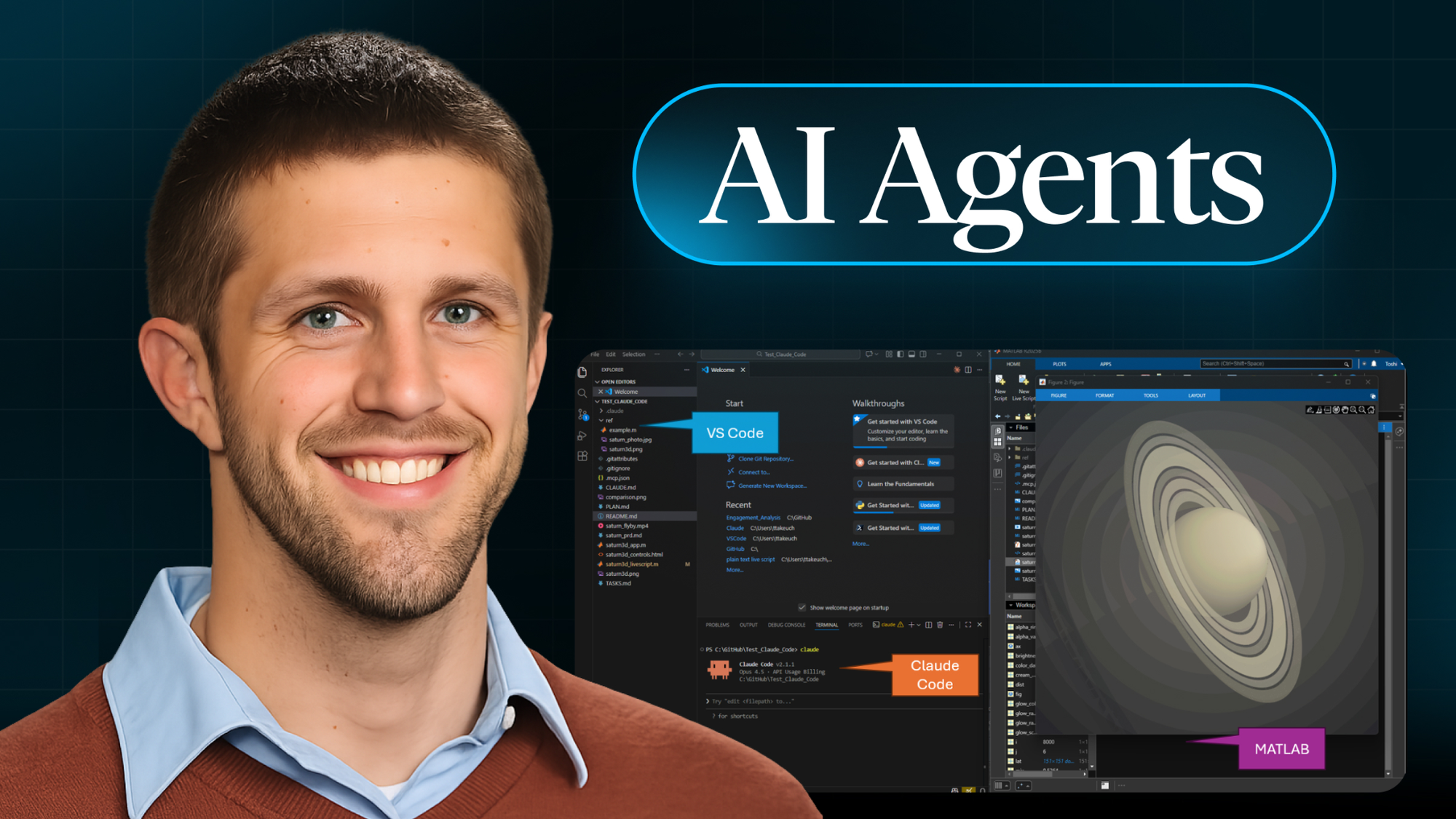
What is Agentic AI?
At its core, agentic AI refers to systems that do more than respond to prompts. DeLand explains that where traditional generative AI produces content like text, images, or snippets of code, agentic AI agents carry out tasks toward a predefined goal with minimal human supervision, breaking problems into sub-tasks, planning solutions, and executing actions across tools and systems. Unlike early AI automation, which required strict rule sets or directed inputs, these agents operate with planning and execution loops that resemble human workflows.
This change hasn’t happened in isolation. The public spotlight on projects like AutoGPT, an open-source AI agent that breaks user goals into subtasks and executes them with large language model reasoning, illustrates how autonomous systems can operate independently, planning and performing steps without constant direct commands. It also underscores how rapidly the field is evolving: models and agent frameworks that were experimental just a few years ago are today worthy of mainstream engineering discussion.
The Complexity Behind Modern Engineering Workflows
The conversation around agentic AI matters precisely because modern engineering workflows are increasingly complex. Modern engineered systems are rarely built from a single discipline. Instead, they combine models, simulations, software components, hardware constraints, and cross-disciplinary dependencies that must work together reliably. Traditional AI supported isolated pieces of that workflow, such as signal estimation or predictive modeling. Agentic AI aims to go further by acting as a collaborator capable of navigating multiple parts of the engineering workflow.
But what does this shift really mean for engineers today and in the near future?
One key difference is how we define the boundary between what humans do and what AI can assist with. In the early days of machine learning, engineers spent significant time preparing datasets, cleaning signals, selecting algorithms, and validating model performance. The majority of the effort was focused on the mechanics of training and optimizing models.
Generative AI changed that dynamic by offering pretrained models that engineers could immediately use to generate code, summarize documentation, or explain algorithms without training anything from scratch. This lowered the barrier to entry and made AI more accessible across engineering teams.
Agentic AI goes even further by enabling systems to plan and sequence actions. Rather than simply generating text or code, agentic systems can interact with tools to create files, refactor code, generate tests, or trigger steps in a workflow. DeLand explains that the key distinction lies in giving AI access to tools or APIs. Once an AI system can call external tools, it moves beyond suggestion and begins performing tasks on the same artifacts engineers work with.
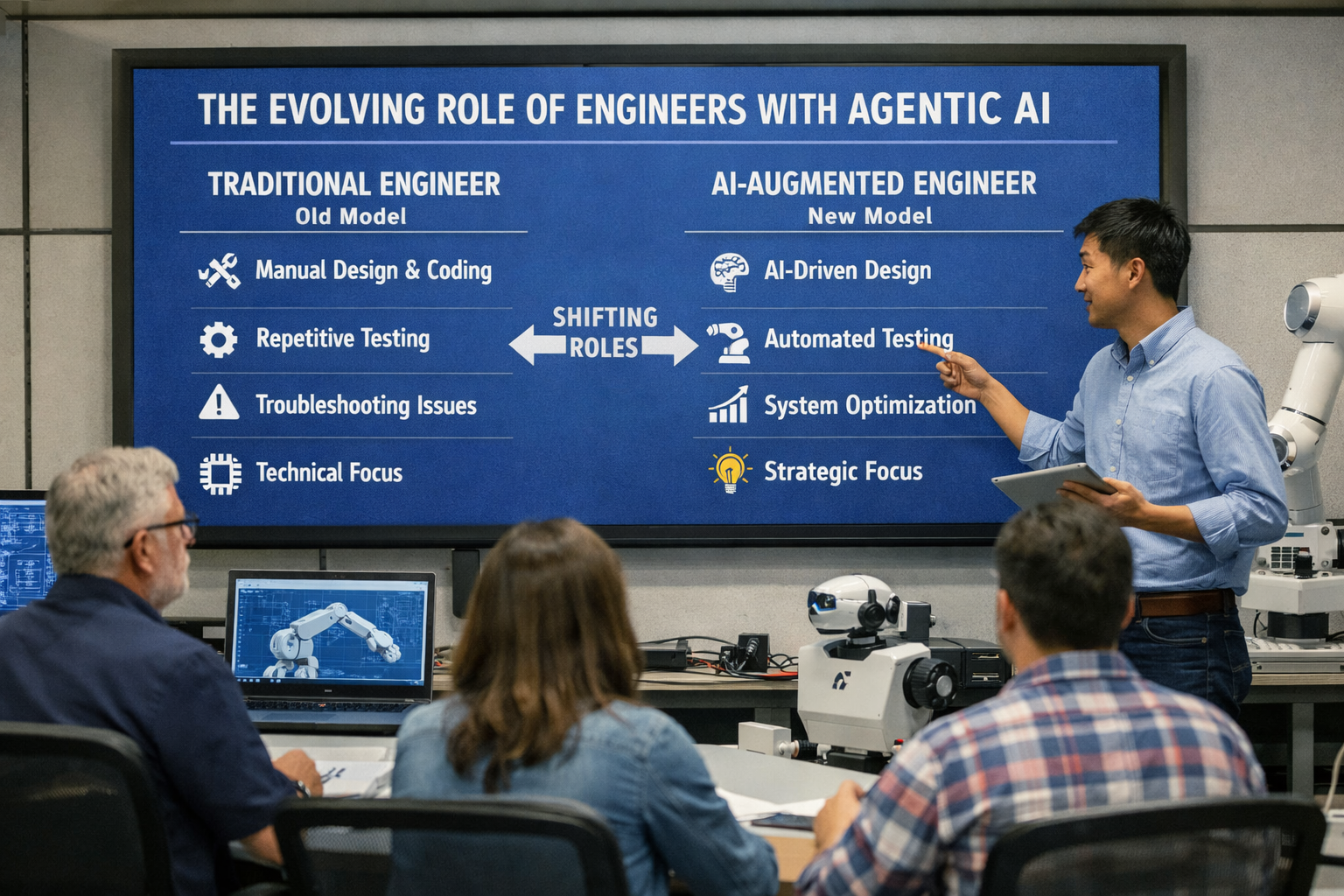
This capability also changes how engineers approach problem-solving. Traditionally, engineers often spent a long time thinking through a problem before implementing anything, since writing and testing solutions manually was time-consuming. With agentic AI, engineers can generate multiple prototypes quickly and compare different approaches early in the design process. As DeLand notes, this shortens the cycle between an idea and a proof of concept, allowing engineers to experiment more freely before committing to a final design.
The result is a shift toward working at a higher level of abstraction. Engineers increasingly focus on defining problems, specifying constraints, and shaping the solution space, while the AI handles many of the lower-level implementation tasks. DeLand describes this process as essentially “turning the AI loose” within a constrained environment, where the engineer provides direction and oversight while the system explores possible solutions.
Importantly, this shift does not remove the engineer from the loop. In safety-critical domains such as automotive or aerospace systems, engineers remain responsible for verifying and validating results. Agentic AI can accelerate exploration and development, but human judgment is still required to ensure designs meet performance, safety, and reliability requirements.
How MathWorks Is Approaching Agentic AI
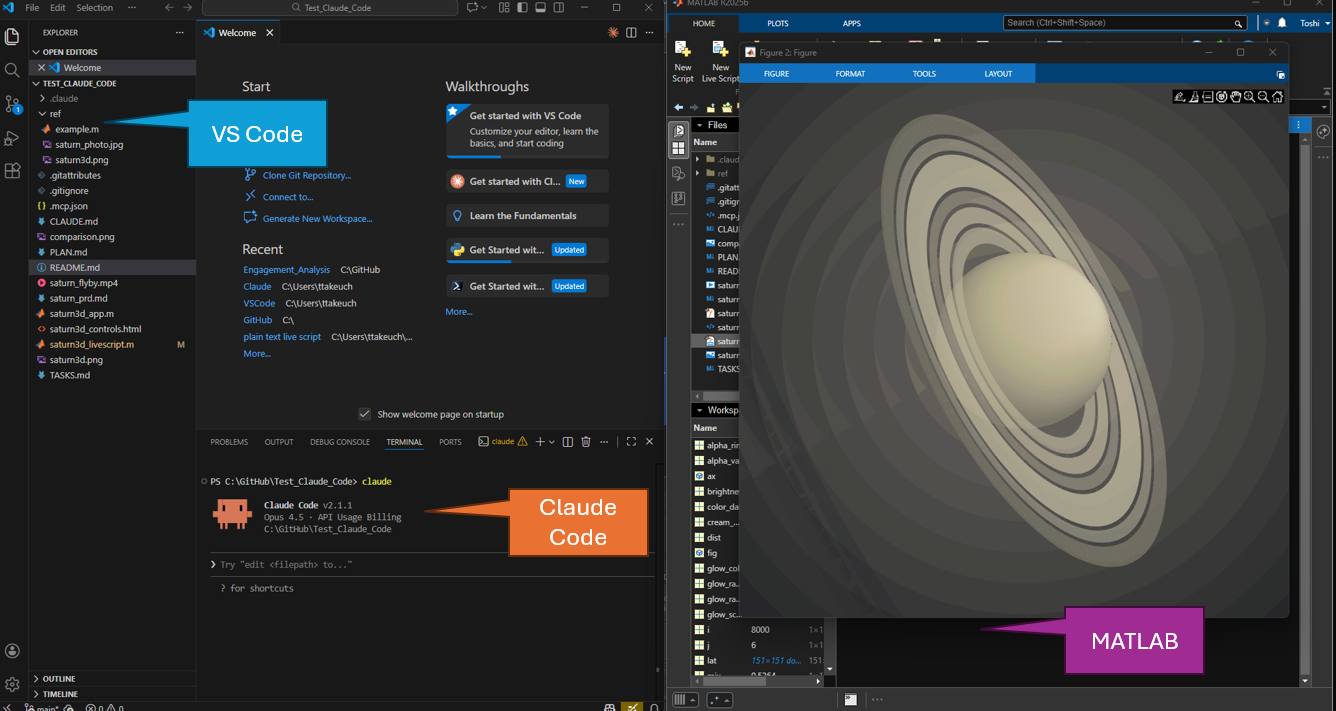
Companies like MathWorks are at the forefront of exploring models where Agentic AI fits into real engineering workflows. The tools aim to integrate generative and agentic capabilities directly into environments that engineers already use for modeling, simulation, and algorithm development. Their goal is to embed the agents within structured engineering toolchains where requirements, models, simulations, and verification steps are already part of the development process.
DeLand mentions several concrete MathWorks efforts that map directly onto the “agentic + tooling” idea:
- MATLAB Copilot is one of the first steps in this direction. Available today, it assists engineers directly within the MATLAB environment by helping generate code, explain existing scripts, add comments, or suggest approaches for solving technical problems. Instead of switching to external tools, engineers can ask for help while staying inside the coding environment they already use, reducing friction and accelerating development.
- Simulink Copilot, currently in beta, brings similar capabilities to model-based design workflows. Because Simulink models often represent complex systems visually through block diagrams, the copilot is designed to help engineers understand models, navigate large systems, and guide them through simulation and design workflows. This is particularly valuable for large engineering teams working with complex system models that span multiple components and disciplines.
- AI Chat Playground is a web-based tool that serves as a simple entry point for engineers curious about how generative AI can assist with MATLAB tasks. It allows users to experiment with conversational AI for code explanations, suggestions, and problem-solving, making it easier for teams to explore what AI-assisted engineering might look like before integrating it into their everyday workflow.
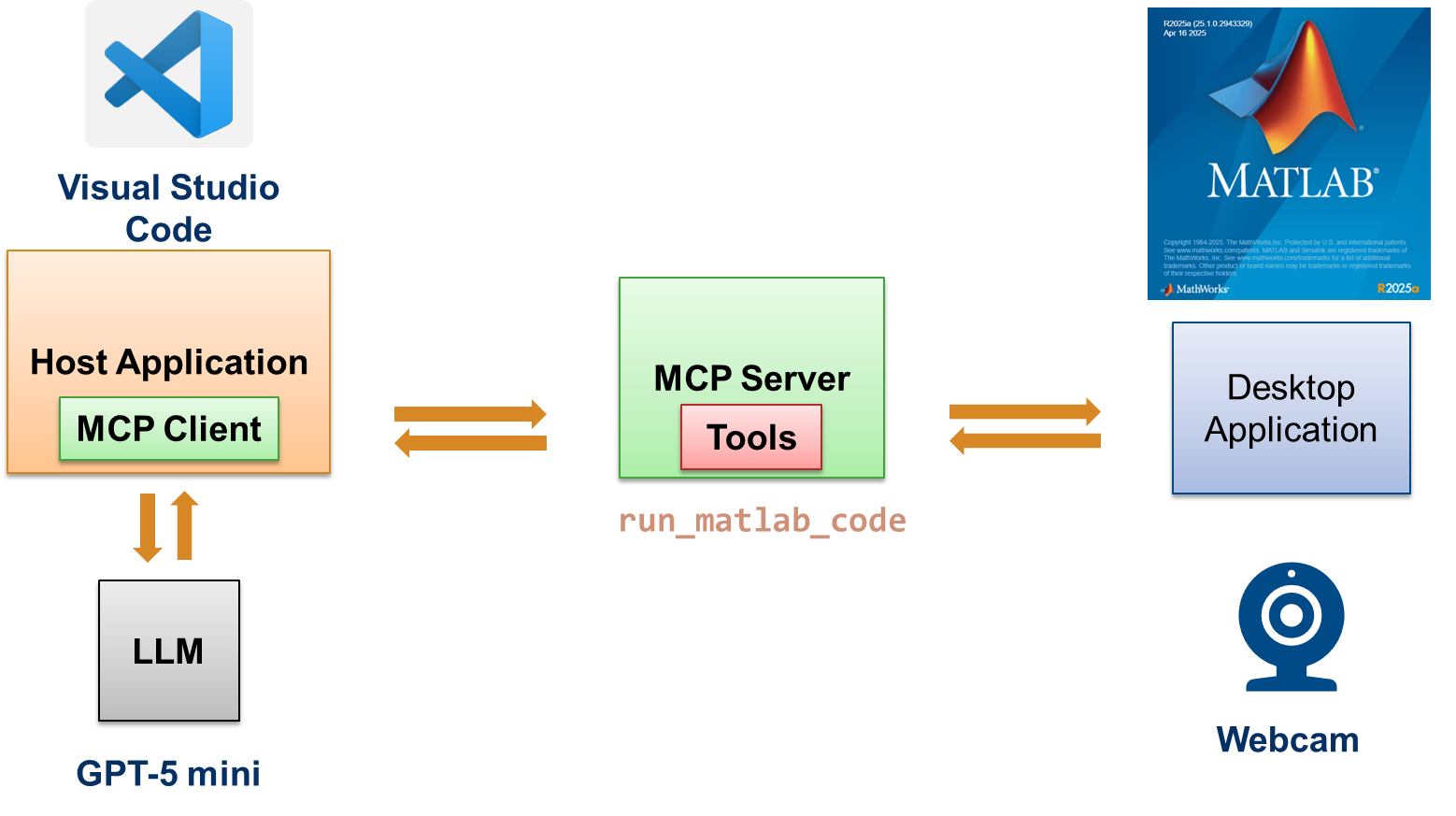
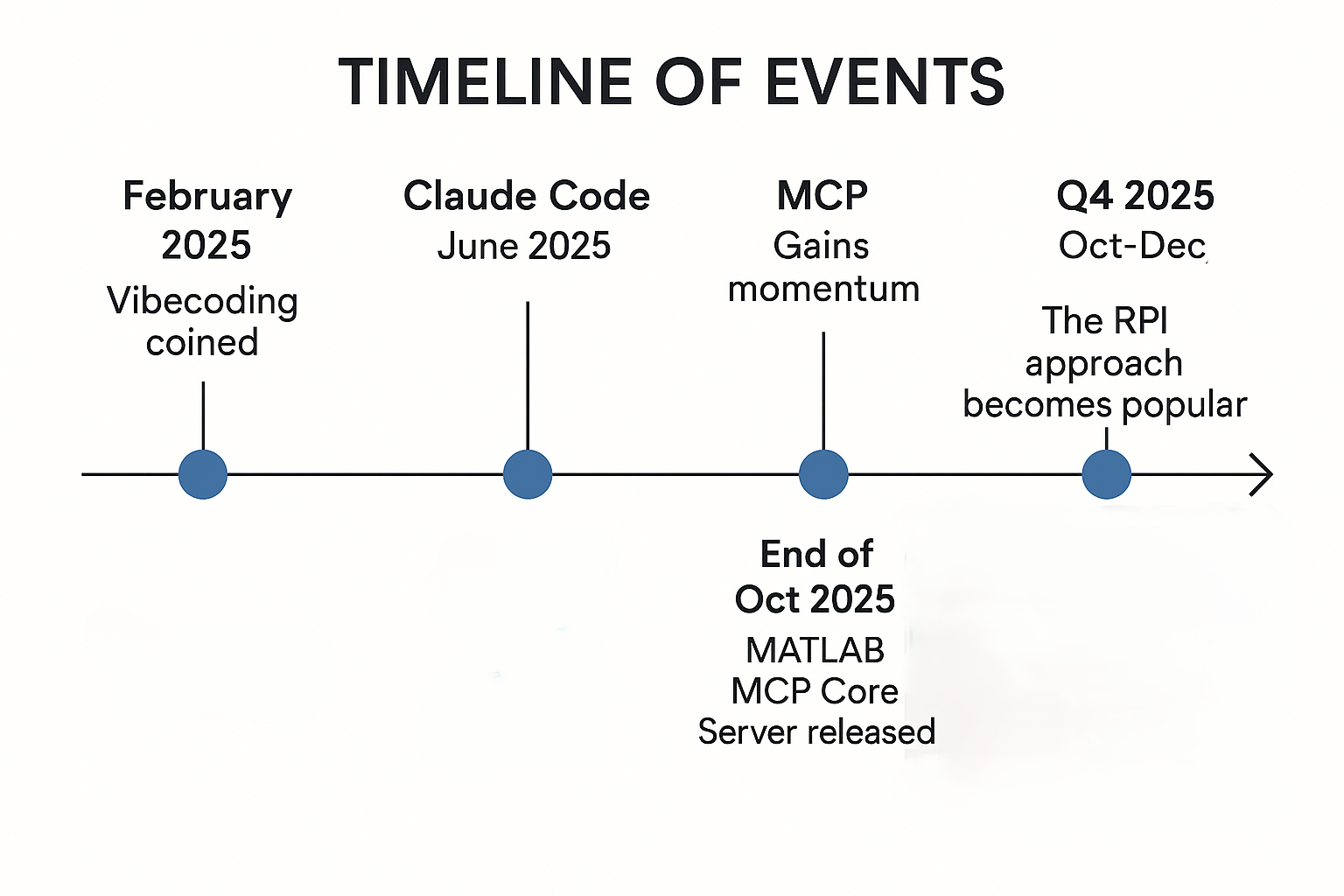
- MATLAB MCP Server (released previously) supports the emerging Model Context Protocol (MCP). MCP acts as a standardized interface between AI agents and engineering tools, allowing agentic systems to interact with MATLAB programmatically. This makes it possible for engineers to incorporate MATLAB into broader agentic workflows, where AI agents coordinate tasks across multiple tools and environments.
The consistent theme is: put AI inside real engineering workflows, not beside them.
Same Profession Title, New Roles
A lingering question among engineers is how the profession itself will evolve in this era. Will engineers need to become more generalists, at risk of losing focus on first-principles thinking? Or will AI allow humans to do what they are uniquely good at: defining problems, interpreting intent, setting constraints, and reasoning about complex systems, while offloading repetitive implementation work?
The emerging narrative suggests a bit of both. Engineers who understand fundamental system design, requirements definition, and cross-service interactions are likely to thrive, while repetitive implementation work may increasingly be candidates for automation. This doesn’t mean first-principles thinking disappears, but it does mean that engineers will spend more of their time orchestrating systems of tools, supervising agentic workflows, and ensuring outcomes meet human expectations.
By 2030, it’s plausible that most engineers entering the field will be thoroughly comfortable with AI tools as part of their workflow. Academic institutions are already incorporating AI education into curricula, preparing students to work with generative and agentic systems as part of everyday development, rather than as an exotic add-on.
AI Agents Are The New Advantage for Engineers Ready to Lead
AI is not on its way to replace engineers. But it will amplifiy their capabilities, enabling them to explore more design options faster, manage complexity more effectively, and leave the minutiae of low-level implementation to machines. But this also means that engineering judgment, risk awareness, and a rigorous approach to verification and validation are more indispensable than ever.
In the end, agentic AI represents an evolution in how engineering work gets done. It builds on decades of progress in machine learning, modeling, and automation, and extends those approaches into autonomous action. For engineers today, understanding both the promise and limitations of these systems will be key to leveraging them responsibly, safely, and effectively as we move beyond 2026 toward an increasingly AI-augmented future.
Subscribe to our deep dive channel to stay up to date on everything happening in AI for engineering: https://www.youtube.com/@JousefM
